
What Packing Materials Do You Really Need for Moving House?
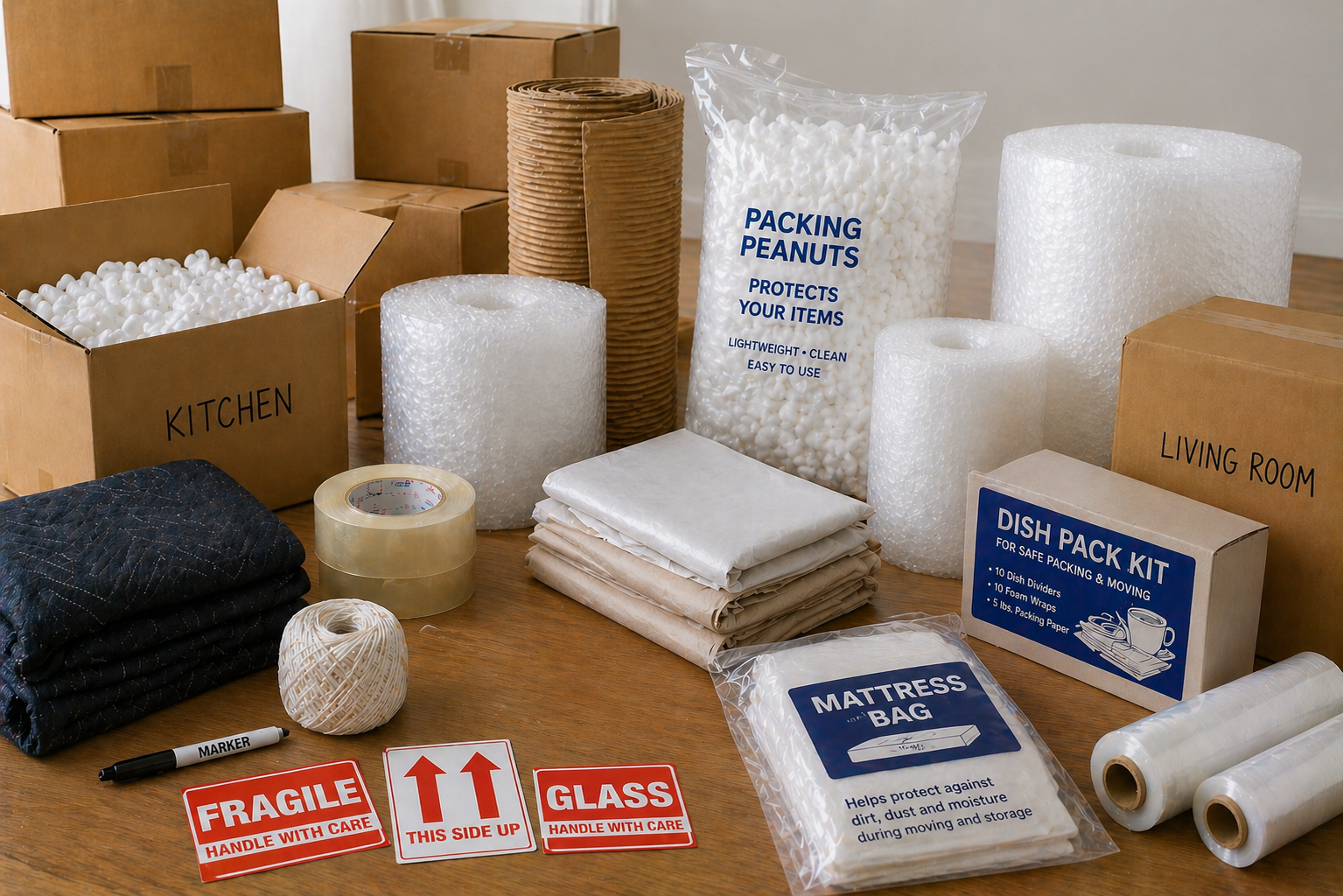
Most people don’t realise how much stuff they own until they try to pack it all into boxes. What starts as a “we’ll get it done in a weekend” plan quickly turns into stacks of half-filled boxes, loose items with nowhere to go, and a growing sense that you’re not as organised as you thought.
A big part of the problem isn’t the moving itself — it’s not having the right packing materials ready from the start. You either run out of boxes, use ones that are too weak, or forget things like proper wrapping for fragile items. That’s when things get stressful, and more importantly, when things get damaged.
If you’re wondering what packing materials you actually need for moving house, the answer is fairly straightforward: a solid mix of sturdy boxes, protective wrapping, and a few simple tools to keep everything in order. Nothing fancy, but it does need to be right.
This guide walks you through exactly what you’ll need, how to use it properly, and a few smart ways to save money along the way — because moving house is already expensive enough as it is.
Essential Packing Materials for Moving House (Full Checklist)
Before you start stuffing things into random boxes, it helps to know exactly what you’re working with. Having the right materials from the beginning saves a lot of back-and-forth later — no last-minute dashes to the shop, no trying to tape up a box that’s clearly had enough.
Here’s what you’ll realistically need for most house moves:
- Cardboard boxes (various sizes) – You’ll want a mix. Smaller boxes are best for heavy items like books (your back will thank you), while larger ones work for lighter things like bedding or clothes. Using only big boxes sounds efficient… until you can’t lift them.
- Strong packing tape – This is not the place to go cheap. Weak tape peels off, splits, and suddenly your belongings are on the floor. Go for something durable and use more than one strip when sealing heavier boxes.
- Bubble wrap – Ideal for anything fragile — glasses, plates, electronics, picture frames. It adds a cushioning layer that stops items knocking into each other during the move.
- Packing paper – A better alternative to newspaper. It won’t leave ink marks on your plates or glasses, and it’s great for wrapping items or filling empty spaces inside boxes.
- Furniture covers or moving blankets – Sofas, mattresses, and wardrobes take a lot of knocks during a move. Covers help protect against dirt, scratches, and general wear from being shifted around.
- Labels and markers – This might seem like overkill at first, but it makes a huge difference later. Clearly labelled boxes mean you’re not opening five of them just to find a kettle.
- Scissors or box cutters – Always overlooked, always needed. You’ll use them constantly — opening boxes, cutting tape, adjusting packing materials.
- Plastic storage boxes (optional) – Not essential, but useful for important documents, valuables, or anything you don’t want getting crushed. They’re sturdier and often stack better than cardboard.
If you’ve got all of the above ready before you start packing, you’re already ahead of most people. Skip a few, and you’ll feel it halfway through when things start getting awkward.
How Many Boxes Do You Need to Move House in the UK?
This is one of those questions people ask a bit too late — usually when they’re halfway through packing and already running out of boxes. There’s no exact number that fits every home, but you can get surprisingly close with a few rough estimates.
For a 1-bedroom flat, most people end up using somewhere in the range of 15 to 25 boxes. That usually covers clothes, kitchen bits, books, and general clutter. If you’ve been there a while (or don’t declutter much), expect it to creep higher.
A 2-bedroom house or flat tends to need around 30 to 50 boxes. This is where things start to add up — extra storage, more kitchen items, maybe a spare room that’s quietly filled up over time.
For a 3-bedroom house, you’re typically looking at 50 to 70+ boxes. Families, garages, and “we’ll deal with that later” cupboards all push the number up quickly. It’s not unusual to underestimate at this stage.
What matters just as much as the number is the type of boxes you use. If everything goes into large boxes, you’ll end up with loads that are too heavy to lift safely. A mix of small, medium, and large boxes makes life much easier — small for dense items like books, larger ones for lighter things like bedding.
It’s also worth slightly overestimating. Running out of boxes halfway through packing is frustrating and slows everything down. Having a few spare gives you breathing room, especially for those last-minute items you forgot about.
One more thing — if you want to reduce the number altogether, decluttering before you start packing makes a bigger difference than people expect. Less stuff in the house means fewer boxes, less lifting, and less to unpack on the other side.
What Is the Best Way to Pack for Moving House?
Packing isn’t complicated, but it does go wrong when it’s rushed or done without a plan. A bit of structure makes a big difference here — less stress, fewer broken items, and far less confusion when you arrive at the new place.
Step 1: Start Early and Pack in Stages
Leaving everything until the last few days almost guarantees a chaotic move. Boxes get rushed, things get mixed together, and fragile items don’t get the protection they need. Starting early gives you time to think properly about what you’re packing and how.
A good approach is to begin with the things you don’t use daily — seasonal clothes, books, decorations, spare bedding. It eases you into the process without disrupting your routine too much, and before you know it, a big chunk is already done.
Step 2: Pack Room by Room
Jumping between rooms might feel faster, but it quickly turns into a mess. You end up with boxes full of random items, which makes unpacking far more frustrating than it needs to be.
Focus on one room at a time and finish it properly before moving on. It keeps everything organised and makes it much easier to place boxes in the right rooms when you arrive at your new home.
Step 3: Label Everything Clearly
It sounds obvious, but this is where a lot of people cut corners — and regret it later. Writing “kitchen” on a box isn’t always enough when you’re trying to find something specific.
A better approach is to include the room and a quick idea of what’s inside, like “Kitchen – mugs and utensils” or “Bedroom – winter clothes.” It saves time, avoids unnecessary unpacking, and makes the whole process feel more under control.
Step 4: Protect Heavy and Fragile Items Properly
This is where packing materials really matter. Heavy items like books should go into smaller boxes so they’re easier to carry, while fragile items need proper wrapping and cushioning to avoid damage.
It’s also important not to overload boxes. Even if they can technically hold the weight, they become difficult to carry and more likely to break. Spreading the weight more evenly keeps things safer for both your belongings and your back.
Step 5: Keep Essentials Separate
There’s always that first night where everything feels a bit disorganised. You don’t want to be digging through ten boxes just to find a toothbrush or a phone charger. Pack a separate “essentials” box with things you’ll need straight away — toiletries, basic kitchen items, chargers, a change of clothes. Keep it close and clearly marked so it doesn’t get buried under everything else.
Done properly, packing isn’t just about getting things into boxes — it’s about making the move itself smoother from start to finish.
Where Can You Get Packing Materials in the UK?
You don’t need to buy everything brand new — that’s one of the biggest misconceptions people have when moving. There are plenty of ways to get decent packing materials without spending a fortune, and in some cases, you won’t pay anything at all.
A lot of it comes down to timing and a bit of asking around. Shops, neighbours, even people online are often trying to get rid of boxes rather than keep them.
- Supermarkets – Places like Tesco or Sainsbury’s usually have spare boxes from deliveries. If you ask at the right time (often early morning or late evening), staff are happy to let you take some. They’re sturdy and free — hard to argue with that.
- Removal companies – Companies sell proper moving kits with boxes, tape, and protective materials. It’s more reliable in terms of quality, but you’ll pay for the convenience.
- Online marketplaces – Platforms like Facebook Marketplace and Gumtree are full of people giving away or selling used boxes after a move. You can often pick up bundles locally for cheap, sometimes even free if you’re quick.
- DIY stores – Shops such as B&Q or Wickes stock purpose-made moving boxes, tape, and protective materials. It’s a straightforward option if you want everything in one place without hunting around.
- Eco-friendly options – Some companies now offer reusable plastic crates that you rent for your move instead of buying cardboard boxes. It’s a cleaner, sturdier option, and you don’t end up with a pile of waste afterwards.
If you’re trying to keep costs down, a mix usually works best — grab free boxes where you can, then top up with a few stronger ones for heavier or fragile items. No need to overcomplicate it.
Cheap and Eco-Friendly Packing Materials (Smart Alternatives)
Moving house has a way of burning through money quickly, so it makes sense to save where you can. Packing materials are an easy place to cut costs if you’re a bit resourceful — and as a bonus, you’ll waste less in the process.
You don’t need to rely entirely on bubble wrap and brand-new boxes. In fact, most homes already have plenty of things that can do the job just as well.
- Use towels and clothes instead of bubble wrap – Soft items like towels, jumpers, and even socks are perfect for wrapping fragile things. Plates, glasses, and small electronics can be protected just as well without spending extra.
- Reuse old boxes – If you’ve got boxes from deliveries lying around, use them. They might not look perfect, but as long as they’re sturdy, they’ll do the job. You can always reinforce them with tape if needed.
- Rent plastic moving boxes – Instead of buying cardboard you’ll throw away later, some UK services let you rent solid plastic crates. They stack neatly, protect contents better, and get collected once you’re done.
- Avoid overbuying materials – It’s easy to panic and buy too much. Start with the basics, pack a bit, then reassess. Most people end up with leftover materials they never use.
- Recycle after the move – Once you’ve unpacked, don’t just bin everything. Boxes, paper, and even some plastics can be reused, recycled, or passed on to someone else who’s about to move.
A bit of flexibility here goes a long way. You don’t need a perfectly uniform set of packing supplies — you just need things that protect your belongings and make the move manageable.
Takeaways
- Get your materials sorted before you start – Most moving stress comes from being unprepared. Having the right boxes, tape, and protection ready makes everything smoother from day one.
- Use the right boxes for the right items – Small boxes for heavy things, larger ones for lighter items. It sounds simple, but it saves your back and stops boxes from splitting.
- Don’t guess the number of boxes – Always overestimate slightly. Running out halfway through packing slows you down and adds unnecessary stress.
- Pack with a plan, not in a rush – Starting early, working room by room, and labelling properly makes unpacking far easier and less chaotic.
- Save money where it makes sense – Free boxes, reused materials, and household items can do the job just as well without adding to your moving costs.